


AquaINFRA News
Freshwater Biodiversity Is Declining Faster Than Marine or Terrestrial — Why Isn't It Getting More Attention?
May 27th, 2026
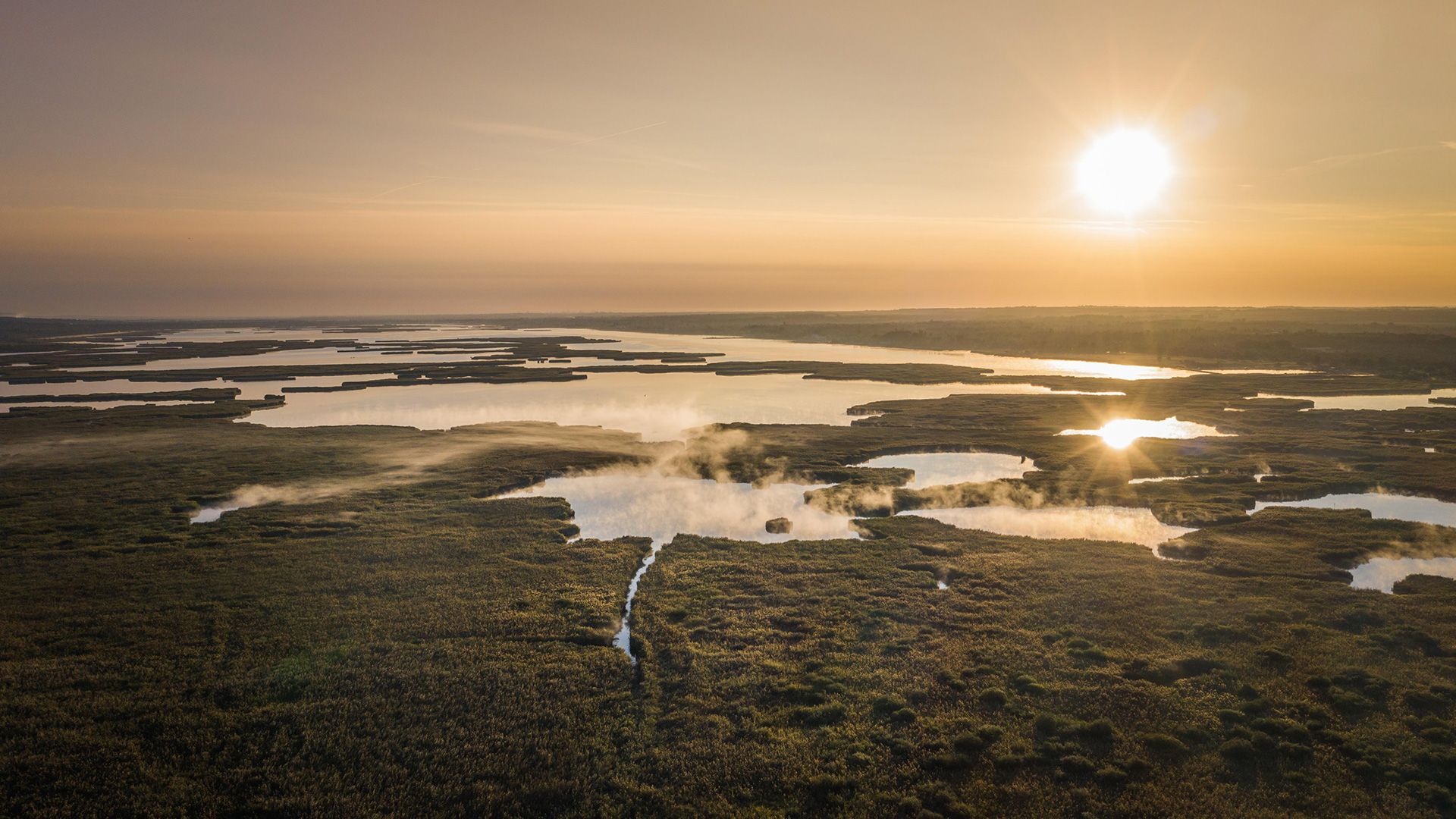
Rivers, lakes, and wetlands cover roughly 1 per cent of the Earth’s surface. Yet they support approximately 10 per cent of all known species and around one-third of all vertebrate species. By any measure, freshwater ecosystems punch far above their weight in biological terms.
They are also losing that biodiversity at an alarming rate. The Living Planet Report 2022, published by WWF and the Zoological Society of London, recorded an average 83 per cent decline in monitored freshwater vertebrate populations between 1970 and 2018, roughly double the rate observed for marine species and nearly three times the rate for terrestrial ones. This is not a new finding. The disproportionate decline in freshwater biodiversity has been documented in successive editions of the report for over a decade.
And yet, freshwater biodiversity receives a fraction of the conservation attention, research funding, and public concern directed at terrestrial and marine ecosystems. The question is worth asking directly: why?
The scale of the crisis
The numbers are stark. Globally, one-third of freshwater fish species are now considered threatened with extinction, according to the IUCN Red List. Freshwater megafauna, large species such as sturgeons, river dolphins, giant catfish, and freshwater turtles, have declined by 88 per cent since 1970. In Europe, migratory freshwater fish populations have fallen by 93 per cent over the same period.
These declines are driven by a familiar set of pressures. Habitat degradation and loss, including dam construction, channel modification, wetland drainage, and floodplain development, are the primary drivers. Pollution from agricultural run-off, wastewater discharge, and industrial contamination adds further pressure. Overexploitation, invasive species, and climate change compound the problem.
What makes freshwater systems particularly vulnerable is their physical structure. Rivers and lakes are linear or isolated features within a terrestrial landscape, making them disproportionately exposed to land-use pressures. A river integrates the impacts of everything that happens in its catchment. A lake receives the accumulated run-off from its entire drainage basin. There is no equivalent, in marine or terrestrial systems, of this concentrated exposure to diffuse pressures.
The connectivity of river systems, while ecologically essential, also means that impacts propagate. A dam does not just block fish passage at a single point, it fragments the entire upstream habitat, alters flow regimes downstream, traps sediment, and changes water temperature. The cumulative effect of approximately 1.2 million barriers in European rivers, as documented by the AMBER project, represents a level of habitat fragmentation with no terrestrial parallel.
The attention deficit
Given the severity of the crisis, the relative lack of attention is striking. Several factors help explain it.
Out of sight, out of mind. Freshwater biodiversity is largely invisible to the public. People notice birds, mammals, and forests. They are moved by images of coral reefs and charismatic marine species. But the organisms that make up the bulk of freshwater biodiversity, invertebrates, small fish, amphibians, aquatic plants, do not generate the same emotional response. A mussel species going extinct in a European river does not make the evening news.
Fragmented governance. Freshwater management is typically divided among multiple authorities, water supply, flood management, agriculture, environment, energy, each with different priorities. Biodiversity conservation is often subordinate to economic uses. The EU Water Framework Directive includes ecological status as an objective, but implementation has been uneven, and the 2027 deadline for achieving good status in all water bodies will be missed by a wide margin.
Research funding imbalance. Marine science has benefited from decades of dedicated funding programmes, international coordination bodies, and high-profile research vessels. Freshwater science, while well-established as a discipline, has historically received less dedicated funding at the European level. The result is that marine ecosystems are generally better monitored and better understood, which in turn makes it easier to argue for their protection.
The terrestrial bias in conservation. Conservation policy and practice have been shaped predominantly by terrestrial ecologists. Protected area networks, which form the backbone of biodiversity conservation, were designed primarily for terrestrial habitats. The Natura 2000 network includes freshwater habitats, but the designation criteria and management approaches often reflect terrestrial thinking, focusing on specific sites rather than the catchment-scale connectivity that freshwater species require.
Data gaps. Freshwater biodiversity monitoring is patchy across Europe. Some countries maintain excellent long-term datasets for fish, macroinvertebrates, and aquatic plants. Others have limited monitoring outside the requirements of the Water Framework Directive. Standardised, continent-wide assessments of freshwater biodiversity status are difficult to produce, which makes it harder to communicate the scale of the problem to policymakers and the public.
What would adequate attention look like?
Recognising the problem is the first step. Addressing it requires action on several fronts.
Monitoring that matches the scale of the crisis. Europe needs freshwater biodiversity monitoring that is systematic, standardised, and sustained. This means going beyond the biological quality elements required by the Water Framework Directive, which were designed primarily for assessing ecological status, not for tracking biodiversity trends, to include comprehensive species inventories, population monitoring for key groups, and genetic diversity assessments. Environmental DNA (eDNA) methods, which can detect species from water samples, offer a practical route to scaling up biodiversity monitoring in freshwater systems.
Catchment-scale thinking. Protecting freshwater biodiversity requires managing entire catchments, not just individual water bodies or riparian corridors. Land use in the catchment determines nutrient and sediment inputs. Hydrological connectivity determines whether species can migrate and populations can exchange individuals. Dam removal and fish passage restoration, areas where Europe has made progress through initiatives like the EU Biodiversity Strategy’s target to restore 25,000 km of free-flowing rivers, are essential but insufficient without addressing broader catchment pressures.
Integration of freshwater into broader biodiversity policy. The Kunming-Montreal Global Biodiversity Framework, adopted in December 2022, includes targets relevant to freshwater, particularly Target 2 on ecosystem restoration and Target 3 on protected areas. But translating these global targets into national action that specifically addresses freshwater ecosystems remains a challenge. Freshwater needs to be explicitly and prominently included in national biodiversity strategies, not treated as an afterthought.
Better data infrastructure. Understanding freshwater biodiversity decline, and measuring progress towards reversing it, depends on data. Species occurrence records, population time series, habitat condition assessments, and environmental monitoring data all need to be findable, accessible, and interoperable across national boundaries. European data infrastructure projects, including those working within the EOSC framework, have a role to play in connecting freshwater biodiversity data that currently sit in fragmented national databases.
Public engagement. Freshwater biodiversity will not receive adequate political and financial support without broader public awareness. This requires better communication about the ecological and economic value of freshwater ecosystems, including their role in water purification, flood regulation, carbon storage, and recreation, and about the consequences of continued decline. It also requires finding ways to make freshwater biodiversity visible and valued, whether through citizen science programmes, urban river restoration, or simply better natural history communication.
A disproportionate crisis deserving a proportionate response
The decline of freshwater biodiversity is not a marginal issue affecting a minor component of global ecosystems. It is the fastest-moving biodiversity crisis on the planet, affecting ecosystems that provide essential services to hundreds of millions of people in Europe alone. Rivers supply drinking water. Lakes support fisheries and tourism. Wetlands attenuate floods and filter pollutants.
The gap between the severity of the freshwater biodiversity crisis and the attention it receives is not sustainable. Closing that gap requires better monitoring, better data infrastructure, better policy integration, and a fundamental recognition that freshwater ecosystems, despite their small spatial footprint, are among the most valuable and most threatened habitats on Earth.
The science is clear. The trends are documented. What remains is the political and institutional will to act on them at the scale the problem demands.