


AquaINFRA News
Connecting Data and Rivers: Prioritising Danube Restoration through Connectivity and Open Science
November 19th, 2025
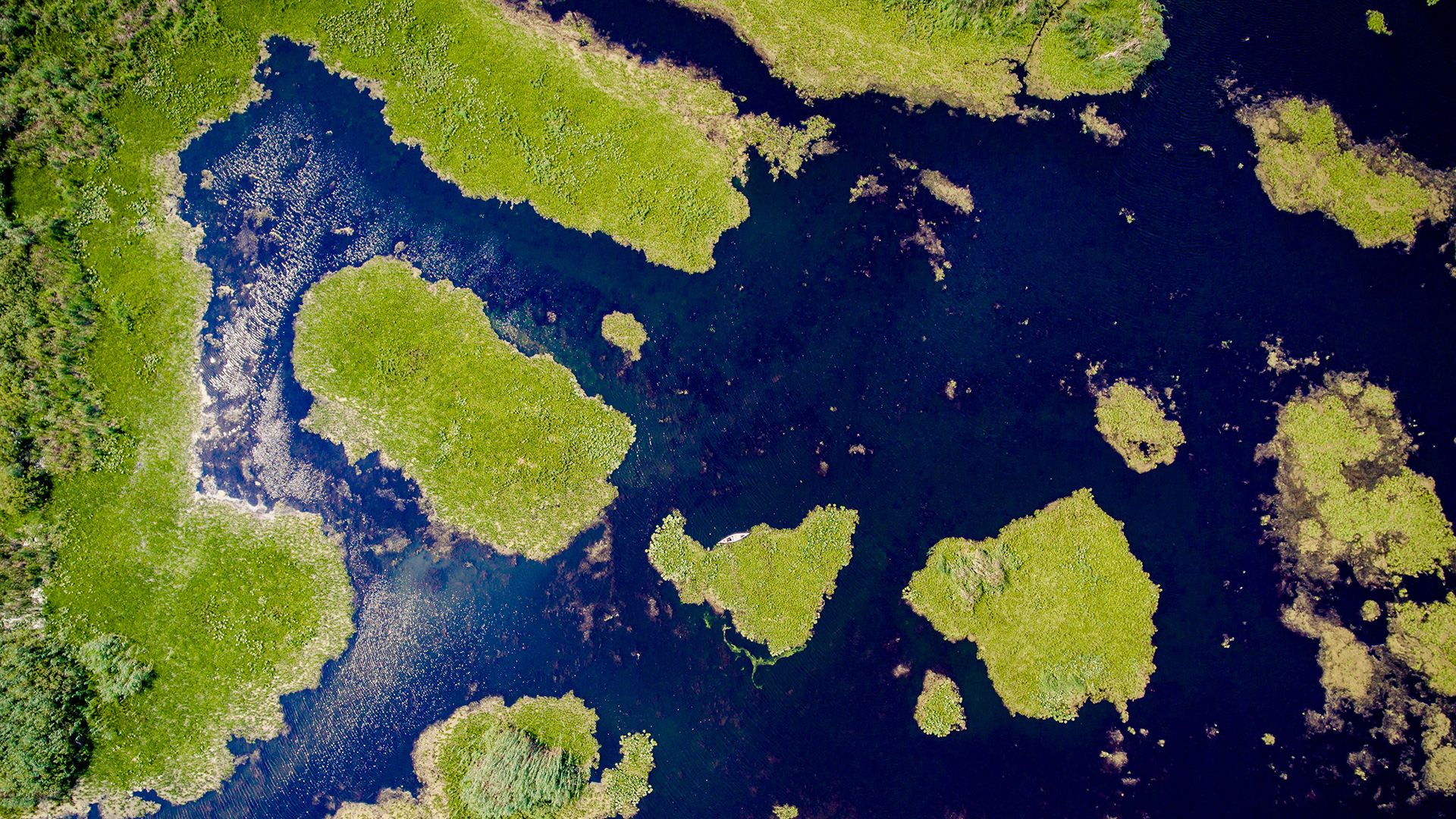
Restoring the Danube River’s health is a uniquely complex challenge. The Danube is the world’s most international river basin, flowing through 19 countries and supporting around 80 million people, and it has lost roughly 68% of its historic floodplains. Extensive habitat loss and fragmentation have severely affected biodiversity and ecosystem services.
A recent study by Sonia Recinos Brizuela, Andrea Funk, Wolfram Graf, Anthony Basooma, and Thomas Hein (2025) presents a data-driven approach to prioritising river and floodplain restoration in the Danube Basin. Published in Restoration Ecology, their work applies hydrological connectivity metrics and ecological indicators to guide restoration planning where it can deliver the greatest ecological impact. The study utilises both the R packages specleanr to detect outliers in the macroinvertebrate abundance and fwtraits to extract ecological traits from the www.freshwaterecology.info database.
Full publication available here:
https://doi.org/10.1111/rec.70238
Hydrological Connectivity as a Restoration Target
Hydrological connectivity, the water-mediated linkage between a river and its floodplains, is central to restoring ecological processes in large basins. Reconnecting side channels and floodplain wetlands can reduce hydromorphological pressures, restore natural habitat heterogeneity, and revitalise aquatic communities.
In the Upper Danube, the study focused on reconnecting river and floodplain systems within the Donau-Auen National Park in Austria. Recinos Brizuela and colleagues selected two freshwater invertebrate groups, worms (Oligochaeta) and midges (Chironomidae), as ecological indicators to assess how aquatic biodiversity responds to improved connectivity.
Using a Before–After–Control–Impact (BACI) design, the researchers compared restored and control sites before, shortly after, and long after restoration. This method allowed them to distinguish the ecological effects of reconnection from natural variability.
The team also applied graph-theoretical connectivity analysis to quantify how restoration interventions improved hydrological links. This network-based approach measured how water exchange between the river and floodplain changed over time and how this affected biodiversity.
Results showed clear short-term ecological gains: oligochaete diversity increased, and the functional traits of both worms and midges shifted in favour of species better adapted to more dynamic and connected habitats. Traits such as flow preference, dispersal strategy, and body size changed, reflecting improved habitat conditions and ecosystem resilience.
However, the study also revealed that these benefits can be temporary. Over time, sediment deposition and vegetation succession caused parts of the floodplain to re-isolate, a process known as terrestrialisation. Many initial biodiversity gains diminished in the long run, highlighting that single interventions are insufficient without adaptive management. The authors argue that restoration must be viewed as a continuous, adaptive process, one that enhances long-term resilience rather than simply recreating historical conditions.
Integrating Ecology, Connectivity, and Data at Basin Scale
Although the study focused on a specific restoration project, it forms part of a broader, basin-scale framework for prioritising restoration across the Danube. In related work, Funk and colleagues have developed data-driven models to identify where restoration or conservation actions will have the most significant effect.
This approach integrates biophysical, ecological, and connectivity data to evaluate restoration potential across the entire river network. For example, hydrological data describe the degree of floodplain disconnection or channelisation, while ecological data capture biodiversity indicators such as species richness and functional traits.
By combining these datasets in a multi-criteria optimisation model, the team could map areas where restoration delivers the greatest benefit for both biodiversity and ecosystem services. Using standardised 10-kilometre river segments and open datasets like Natura 2000 (https://natura2000.eea.europa.eu/), the model identifies restoration hotspots, river sections where improving lateral connectivity can maximise ecological returns with the least effort.
This integrative approach demonstrates how open data and reproducible modelling can transform restoration planning from local actions into basin-wide strategies. It provides managers and policymakers with evidence-based prioritisation tools grounded in data, not assumptions.
Open Data, FAIR Workflows, and AquaINFRA’s Vision
Effective restoration science for transboundary rivers like the Danube depends on cross-border data sharing and collaboration. The study underscores how open, standardised datasets, from EU environmental databases to open-access species records, enable reproducible restoration modelling at scale.
Reproducibility and transparency are essential. The authors’ integration of connectivity metrics, ecological indicators, and open data sources creates a framework that others can replicate across different river systems. This approach supports the FAIR principles (making data Findable, Accessible, Interoperable, and Reusable) that underpin modern environmental science.
These same principles lie at the heart of the AquaINFRA project, which is building a Virtual Research Environment (VRE) and Data Discovery and Access System (DDAS) on the European Open Science Cloud (EOSC). AquaINFRA’s goal is to connect inland, coastal, and marine data systems into one interoperable infrastructure supporting the entire hydrosphere.
By demonstrating the value of open data, integrative modelling, and hydrological connectivity, the Danube restoration study exemplifies AquaINFRA’s vision. It shows how data infrastructure can support actionable science, helping to design effective, resilient restoration strategies that transcend national borders and disciplinary boundaries.
In summary, Recinos Brizuela et al. (2025) illustrate how restoring rivers is not only an ecological task but a data challenge. Combining connectivity analysis with ecological indicators provides a reproducible, scalable method for prioritising interventions. Their work offers a scientific foundation for future restoration efforts and aligns perfectly with AquaINFRA’s mission to enable FAIR, data-driven management of Europe’s aquatic ecosystems.
Reference
Recinos Brizuela, S. S., Funk, A., Graf, W., Basooma, A., & Hein, T. (2025). Responses of Oligochaeta and Chironomidae to restoration of connectivity in a river–floodplain stretch of the Upper Danube River. Restoration Ecology, 35(8), e70238.
https://doi.org/10.1111/rec.70238